Spinal Stenosis and Why It Limits Walking Tolerance the Way It Does

Lumbar spinal stenosis is the narrowing of the spinal canal — the bony tunnel that houses the lumbar nerve roots as they travel from the spinal cord to the legs. Narrowing develops from the cumulative effect of degenerative changes: disc bulging compresses from the front, facet joint hypertrophy and bone spurs encroach from the sides and back, and thickening of the ligamentum flavum — the elastic band lining the posterior canal — further reduces the space available for the nerves. The characteristic symptom — neurogenic claudication — arises because standing and walking increase the compression on the narrowed nerve roots, while sitting or bending forward creates temporary relief by opening the canal slightly. 

This positional quality is the clinical fingerprint of stenosis: leg heaviness, aching, cramping, or numbness that builds with walking and walking distance, then clears when the patient sits or leans forward. The 'grocery cart sign' — patients who can walk further when leaning on a shopping cart — reflects exactly this mechanism. For working adults in Cumberland County — those in trades, agriculture, food production, or any occupation that requires sustained standing or walking — the functional impact of stenosis is direct and economic. A stonemason who can stand for twenty minutes before his legs give out, a warehouse worker whose walking tolerance has dropped to two hundred feet, a greenhouse worker who cannot complete a shift without rest stops — the stenosis is not just a medical condition, it is a job performance problem and a quality-of-life problem.

The Functional Threshold — When Conservative Management Has Run Its Course

The decision to recommend laminectomy is grounded in function, not in how severe the stenosis looks on an MRI. Imaging severity and symptom severity do not always track together: some patients with significant-appearing stenosis on MRI maintain good walking tolerance; some patients with moderate-appearing stenosis cannot walk a single block. We evaluate both, and we recommend surgery when the functional limitation — the actual impact on the patient's daily life and ability to work — is severe enough and conservative measures have genuinely been completed.

A completed conservative trial means physical therapy has been done, not simply suggested. It means epidural steroid injections have been tried when appropriate and have provided insufficient or short-lived benefit. It means the patient has reached a functional floor that medications and activity modification cannot raise. Many Vineland patients arrive at this conclusion having managed their stenosis for years with their primary care physician — a picture that is familiar to our surgeons and that does not require repetition of conservative measures that have already been exhausted.

We do not recommend surgery to patients who are managing well. We do recommend it when the evidence shows it is the most effective option for restoring what the stenosis has taken from the patient's functional life.


Banner media

The Procedure — Decompressing the Canal Without Unnecessary Structural Change

Lumbar laminectomy removes the lamina — the bony roof of the spinal canal at the affected levels — along with the thickened ligamentum flavum and any bone spur or joint hypertrophy contributing to canal narrowing. This creates space for the lumbar nerve roots, relieves the compression that was producing the neurogenic claudication, and restores walking tolerance.

The goal is targeted decompression: addressing the levels where the nerve roots are actually compressed without over-operating at adjacent levels that are not contributing to symptoms. We review imaging carefully before surgery to identify the levels that are responsible for the patient's functional limitation, and surgical planning reflects that analysis. Decompressing levels that are not symptomatic does not improve outcomes and adds physiological burden without benefit.

When spondylolisthesis — a forward slip of one vertebra on the next — is present at the stenotic level, the addition of fusion is often considered, because decompressing an already unstable segment can worsen the slip. This decision is individualized based on the degree of slip, the degree of instability on dynamic imaging, and the patient's overall condition.

Your Surgical Team at POA Vineland

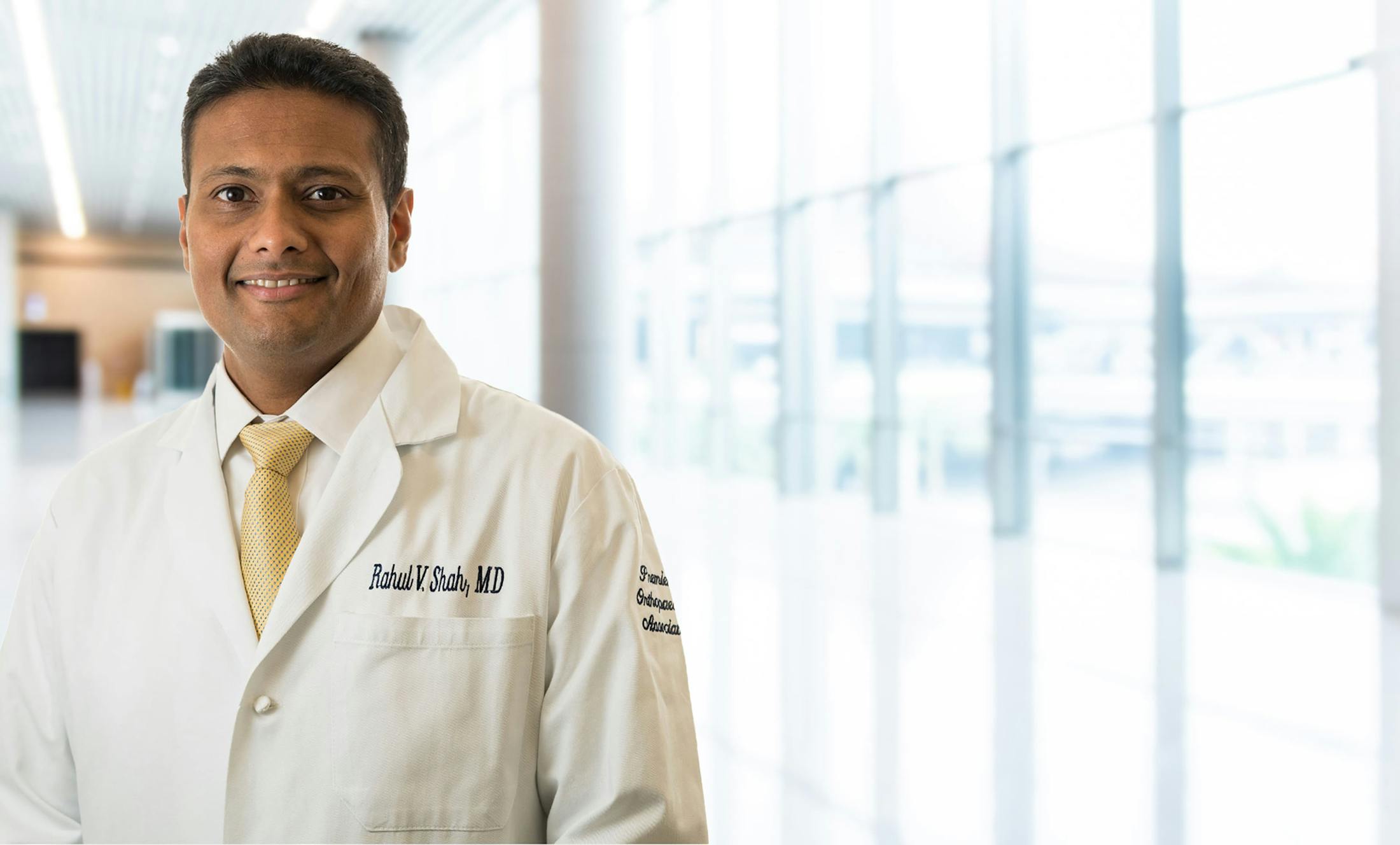
Rahul V. Shah

Dr. Rahul V. Shah, MD, FAAOS

Board-Certified Orthopaedic Spine Surgeon  |  Fellowship-Trained, UCSF  |  Chief Resident, Yale

Dr. Shah's evaluation for laminectomy at the Vineland office is built on a precise match between imaging findings and functional status. He reviews the MRI to identify which levels are actually causing the patient's symptoms — not simply which levels look narrowed — and he frames his surgical recommendation around restoring specific functions that the stenosis has eliminated. For working adults in Cumberland County who need to know not just whether surgery is appropriate but what it will give them back, his precision about indication and outcome expectation provides the foundation for an informed decision.

  • FAAOS - Fellow, American Academy of Orthopaedic Surgeons
  • Spine Surgery Fellowship - University of California, San Francisco
  • Chief Resident - Yale University Orthopaedic Surgery
  • Faculty - Rowan University Medical School

View Full Profile

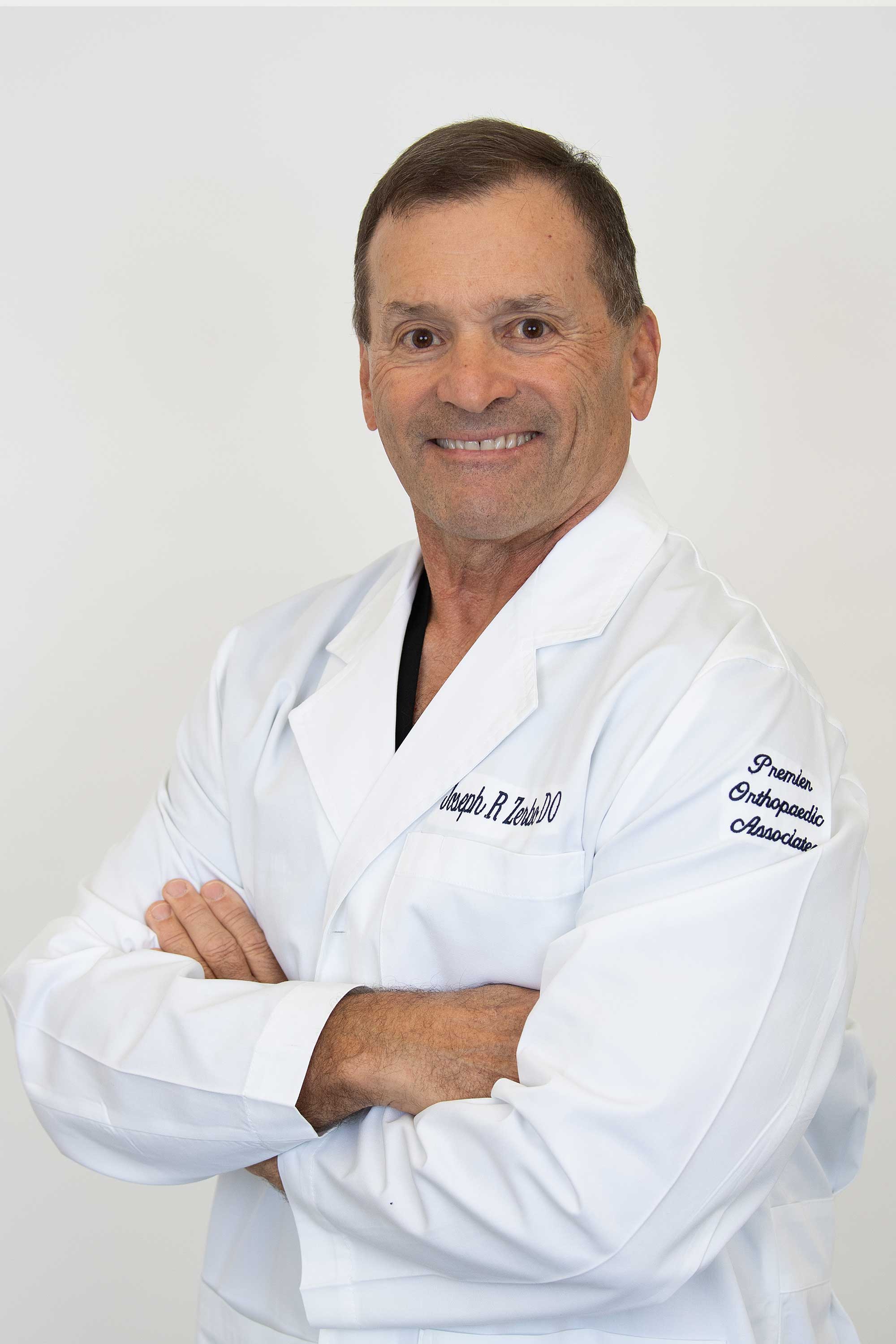
Joseph R. Zerbo male in white lab coat

Dr. Joseph R. Zerbo, DO

Board-Certified Orthopaedic Spine Surgeon  |  NASS Member  |  35+ Years in Southern NJ

Dr. Zerbo's understanding of the Vineland patient population shapes how he approaches the laminectomy conversation. Many of his patients here have been working through their stenosis for years — modifying how they do their jobs, limiting their activities, adapting their lives around the walk-then-rest cycle — before the functional threshold is reached. He approaches that conversation with respect for what they have been managing and honesty about what surgery can and cannot restore. His D.O. whole-person orientation means he thinks about what function recovery looks like for this specific patient: what they need to get back to, what the realistic trajectory is, and what rehabilitation will be required to get there.

  • AOBOS Board-Certified - American Osteopathic Board of Orthopaedic Surgeons
  • NASS Member - North American Spine Society (since 1999)
  • Chief Resident - Kennedy Memorial Hospital / UMDNJ
  • Founder - Zerbo Spine, PA

View Full Profile

Laminectomy FAQs

My stenosis has been getting worse for years — does that mean surgery is inevitable?

I've had epidural steroid injections but they only help for a few months — is that enough of a conservative trial?

Can I keep working during recovery from laminectomy?

Is laminectomy always combined with fusion?

My stenosis has been getting worse for years — does that mean surgery is inevitable?

Progression is common with lumbar stenosis, but the rate varies significantly between patients. Surgical recommendation is based on current functional status and the adequacy of conservative management — not on how long the stenosis has been present or its rate of progression per se. Patients who maintain acceptable function and walking tolerance with conservative measures are not surgical candidates regardless of how long they have had stenosis. The question we are answering is whether the conservative options have genuinely been exhausted and whether the functional limitation is severe enough to justify surgical intervention now.

I've had epidural steroid injections but they only help for a few months — is that enough of a conservative trial?

Injections that provide temporary but not durable relief are a meaningful part of the clinical picture. If you have completed physical therapy and a course of injections is providing only short-lived relief with a progressively shorter duration, that tells us that the conservative toolkit is not providing adequate long-term management of the stenosis. Combined with a functional evaluation that documents your current walking tolerance and activity limitation, that treatment history is exactly the kind of clinical picture that informs a surgical recommendation.

Can I keep working during recovery from laminectomy?

It depends on what you do. Office or sedentary work can often be resumed within two to four weeks. Work that requires sustained standing, walking significant distances, lifting, or bending involves more graduated return-to-work planning — typically six to twelve weeks depending on surgical extent and individual recovery. We have this conversation specifically with Vineland patients whose jobs are physically demanding, because return-to-work planning is not generic: it is specific to what your job actually requires of your body.

Is laminectomy always combined with fusion?

Not always. Decompression alone — laminectomy without fusion — is appropriate when the stenotic levels are stable. Fusion is added when there is spondylolisthesis at the decompressed level, because relieving the posterior tension band at an already unstable segment can worsen the slip. The decision is made based on your imaging, specifically whether a slip is present and whether it is mobile on dynamic flexion-extension X-rays. We explain the imaging findings and our reasoning for including or excluding fusion as part of the surgical planning conversation.

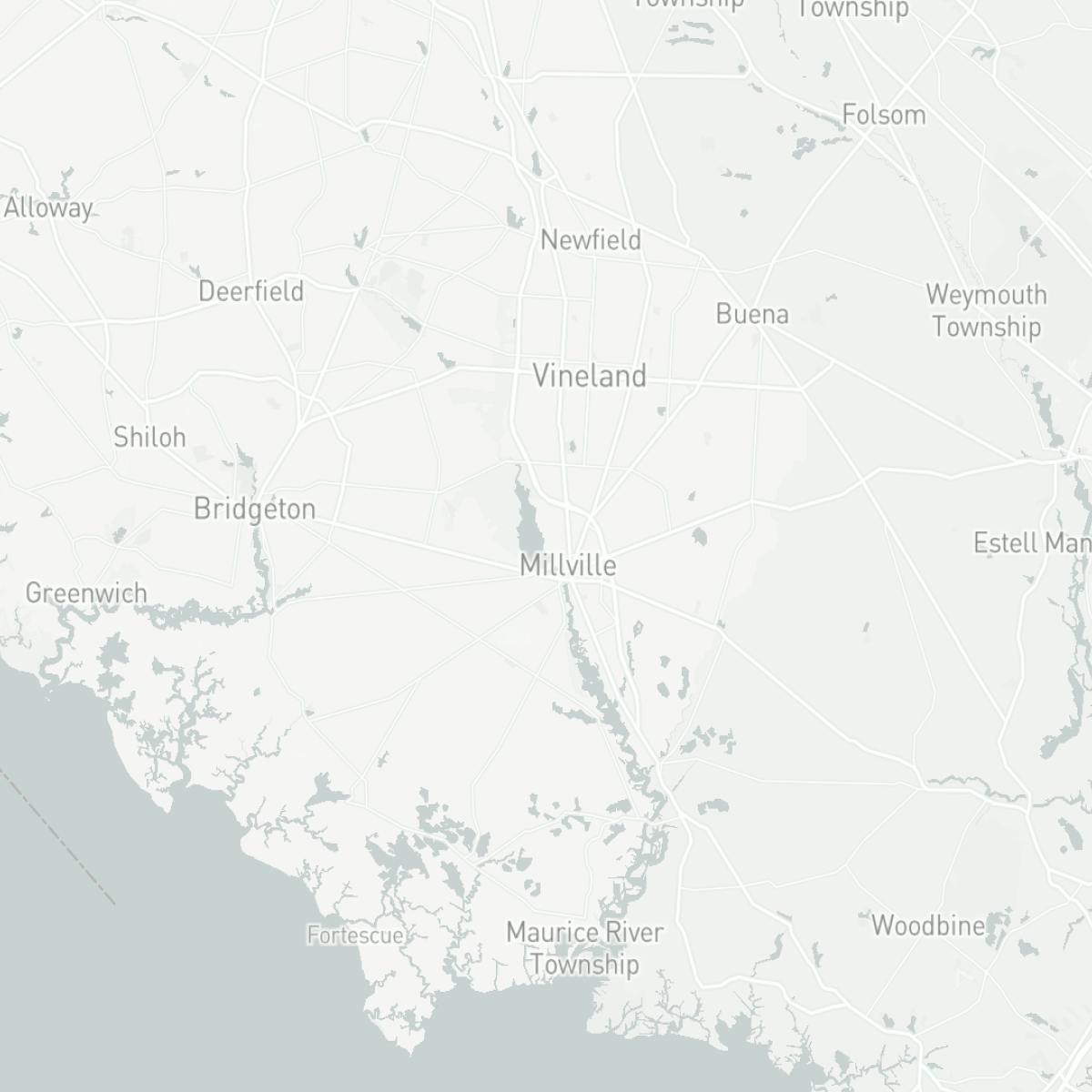
Premier Orthopaedic Associates Vineland

Contact

(856) 690-1616

Hours of Operation

MON — FRI: 8:30AM - 5PM

Contact This Location
Contact us media
Accessibility: If you are vision-impaired or have some other impairment covered by the Americans with Disabilities Act or a similar law, and you wish to discuss potential accommodations related to using this website, please contact our Accessibility Manager at (856) 690-1616.
How can I help you?

Hey there, how can I help you?

Schedule a Visit Find a Provider Bill Pay
Contact Us