The Technical Distinction: What MISS Actually Means

Traditional open spine surgery involves a posterior incision and dissection of the paraspinal muscles away from the spine through subperiosteal stripping — a technique that provides excellent exposure but produces significant muscle trauma, blood loss, and post-operative pain from the approach itself. The recovery period includes not just the healing of the treated spinal structure but also the healing of the muscle tissue disrupted to reach it. Minimally invasive techniques use tubular retractors — cylindrical working channels inserted through the muscle by sequential dilation rather than dissection — to create a working corridor to the spine with minimal disruption of the muscle tissue. 

The surgeon operates through this channel using a microscope or endoscopic visualization. The spinal structures seen through the tubular retractor are the same structures addressed in open surgery; the difference is how the approach is created. The result, when the technique is applied to appropriate anatomy, is a meaningful reduction in approach-related morbidity: less blood loss, less post-operative pain, shorter hospital stays, and faster return to activity. These are real advantages — not marketing language — for the right patients. The caveat is that those advantages exist only when the minimally invasive technique can accomplish the same surgical goal as the open approach. When it cannot, the patient is better served by an open operation that completes the work.

Who Is and Is Not a MISS Candidate — the Anatomy-First Evaluation

At POA Mullica Hill, candidacy for minimally invasive techniques is determined by what the surgery needs to accomplish. Patients with straightforward anatomy at a single level — a herniated disc, focal foraminal stenosis, single-level spondylolisthesis without significant deformity — are often excellent minimally invasive candidates. The surgical goal can be accomplished through a tubular corridor with the same effectiveness as open surgery, and the patient benefits from the reduced approach morbidity.

The anatomy that changes the calculus:

  • Multi-level disease requiring decompression or fusion at three or more levels — exposure through multiple tubular corridors is increasingly complex, and open surgery provides better visualization and instrument control
  • Significant coronal or sagittal deformity requiring correction — deformity surgery requires the spatial access and leverage that open surgery provides
  • Revision surgery with scar tissue and altered anatomy at the operative site — tubular retractors depend on predictable tissue planes that prior surgery may have disrupted
  • Obesity with a thick soft tissue envelope — significantly limits the effectiveness of tubular retractor systems
  • Complex anatomy that requires wide exposure to safely decompress multiple nerve structures

For Mullica Hill patients who arrive having been told they are or are not MISS candidates elsewhere, we review the imaging and make our own assessment. The evaluation is honest: if minimally invasive is right for your anatomy, we recommend it for the right reasons. If open surgery is what the anatomy actually requires, we recommend that instead — and explain why.


Banner media

Minimally Invasive Procedures Performed at Inspira Medical Center Mullica Hill

The operative infrastructure at Inspira Medical Center Mullica Hill supports the full range of minimally invasive spine procedures: operating microscope capability, fluoroscopic guidance, tubular retractor systems, and the scrub and anesthesia teams experienced with minimally invasive technique requirements. Procedures performed in a minimally invasive fashion at our Mullica Hill location include:

  • Microdiscectomy — posterior lumbar disc herniation removal through tubular or microsurgical approach
  • Minimally invasive laminotomy/laminectomy — focal decompression through a tubular corridor for limited-level stenosis
  • MIS TLIF — transforaminal lumbar interbody fusion using percutaneous pedicle screw fixation and a tubular corridor for interbody cage placement
  • Minimally invasive decompression for cervical or lumbar foraminal stenosis — targeted widening of the nerve exit channel

The decision about approach — minimally invasive versus open — is made at the time of surgical planning, after reviewing imaging, clinical history, and prior treatment. It is never made at the time of marketing.

What the Recovery Looks Like After Minimally Invasive Spine Surgery

For patients whose anatomy is well-suited to minimally invasive technique, the recovery advantages are real and clinically meaningful. Reduced blood loss lowers transfusion risk and supports faster early mobilization. Less muscle trauma translates to lower post-operative narcotic requirements and faster return to normal activity. Shorter hospital stays — same-day discharge or one overnight for many minimally invasive procedures — reduce the practical and physiological burden of the surgical episode. Physical therapy after minimally invasive surgery is available through Inspira's rehabilitation network, which offers a practical advantage for Mullica Hill patients: structured rehabilitation can begin in a system where post-operative imaging and follow-up notes are also available. The faster recovery arc of MISS — when the technique is appropriate — means that physical therapy can begin sooner and the functional restoration phase starts from a lower baseline of approach-related pain.

Background media

Your Surgical Team at Premier Orthopaedic Associates

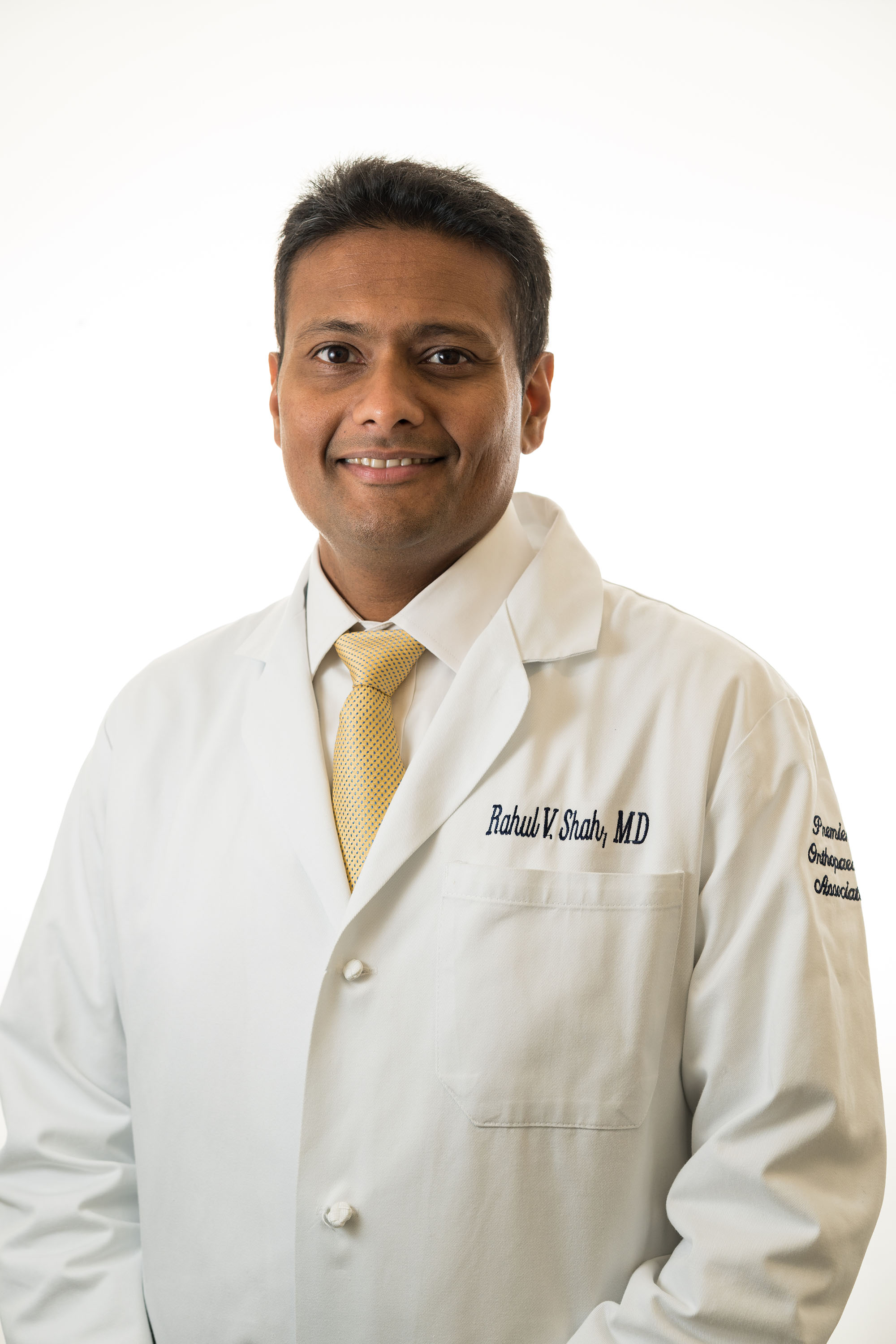
Rahul V. Shah

Dr. Rahul V. Shah, MD, FAAOS

Board-Certified Orthopaedic Spine Surgeon  |  Fellowship-Trained, UCSF  |  Chief Resident, Yale

Dr. Shah performs minimally invasive spine procedures at Inspira Medical Center Mullica Hill and is straightforward about how he applies the technique. His criterion is whether MISS can accomplish the surgical goal as effectively as open surgery for a specific patient's anatomy — not whether the patient heard about minimally invasive surgery and wants the smaller incision. His UCSF fellowship training emphasized the importance of outcome equivalence: MISS is a means, not an end. Mullica Hill patients receive an honest assessment of whether their anatomy makes them a strong minimally invasive candidate or whether open surgery will serve them better.

  • FAAOS — Fellow, American Academy of Orthopaedic Surgeons
  • Spine Surgery Fellowship — University of California, San Francisco
  • Chief Resident — Yale University Orthopaedic Surgery
  • Faculty — Rowan University Medical School

View Full Profile

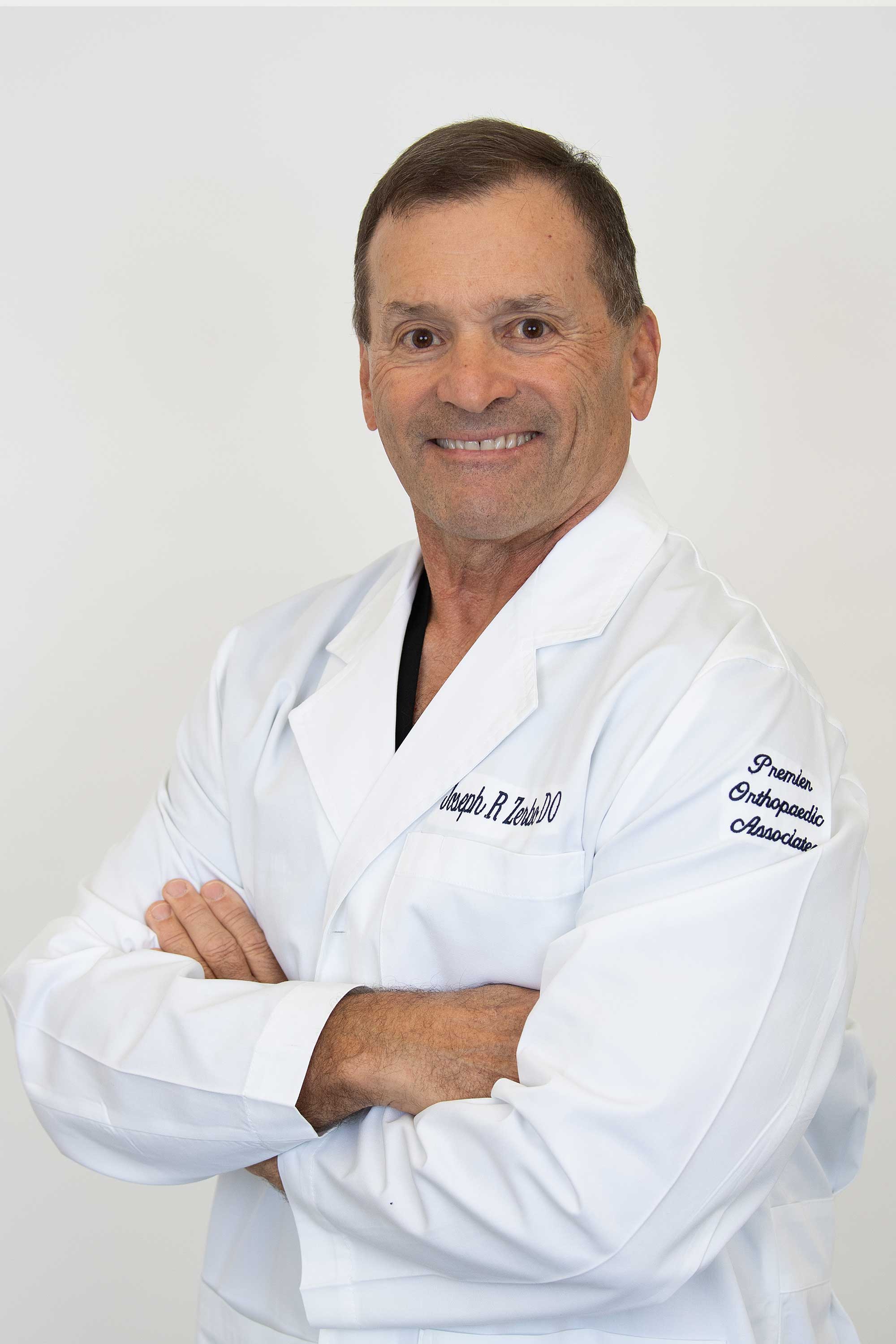
Joseph R. Zerbo male in white lab coat

Dr. Joseph R. Zerbo, DO

Board-Certified Orthopaedic Spine Surgeon  |  NASS Member  |  35+ Years in Southern NJ

Dr. Zerbo has watched minimally invasive techniques evolve considerably over his career, and he evaluates them with the same evidence-based lens he applies to every clinical decision. The recovery advantages of MISS for appropriate patients are real, and he values being able to offer them. His D.O. perspective also shapes how he thinks about MISS in the context of recovery: less post-operative pain, faster mobilization, and earlier rehabilitation engagement support the active recovery process he emphasizes with all his patients. For Mullica Hill patients who are good MISS candidates, those advantages compound into a meaningfully faster return to the activities that matter to them.

  • AOBOS Board-Certified — American Osteopathic Board of Orthopaedic Surgeons
  • NASS Member — North American Spine Society (since 1999)
  • Chief Resident — Kennedy Memorial Hospital / UMDNJ
  • Founder — Zerbo Spine, PA

View Full Profile

Minimally Invasive Spine Surgery FAQs

I was told I'm not a candidate for minimally invasive surgery — should I get a second opinion?

Does minimally invasive mean the surgery is less effective?

Is minimally invasive spine surgery available at the Inspira campus in Mullica Hill?

How do I know if my anatomy makes me a good MISS candidate?

Can I do physical therapy at Inspira after minimally invasive surgery?

I was told I'm not a candidate for minimally invasive surgery — should I get a second opinion?

If you want a second opinion, we are glad to provide one. We review your imaging, understand what the procedure needs to accomplish, and give you our assessment of whether minimally invasive technique is feasible for your anatomy. Sometimes the exclusion is appropriate — anatomy that requires open surgery really does require it, and we will tell you that clearly. Sometimes MISS is feasible and the prior provider either did not offer it or was not experienced with it. The assessment is anatomy-first, and we explain the reasoning behind whatever conclusion we reach.

Does minimally invasive mean the surgery is less effective?

No — when MISS is applied to appropriate anatomy, the surgical outcome is equivalent to open surgery. The difference is in how the approach to the spine is created, not in what is accomplished once the surgeon reaches the operative target. A minimally invasive microdiscectomy removes the herniated disc material with the same completeness as an open microdiscectomy. A minimally invasive TLIF achieves the same decompression and fusion as an open TLIF. The smaller incision reflects reduced approach morbidity, not reduced surgical completeness.

Is minimally invasive spine surgery available at the Inspira campus in Mullica Hill?

Yes. Minimally invasive spine procedures at our Mullica Hill location are performed at Inspira Medical Center Mullica Hill, which has the operative infrastructure — fluoroscopy, microscope capability, tubular retractor systems — that minimally invasive technique requires. For patients already within the Inspira Health Network, the familiar facility environment and care coordination within the same system are added practical benefits.

How do I know if my anatomy makes me a good MISS candidate?

The primary factors are the number of levels involved, the complexity of the deformity or instability, and whether prior surgery has altered the anatomy at the operative site. Single-level disc herniations, focal stenosis, and single-level spondylolisthesis without significant deformity are often good candidates. Multi-level disease, significant deformity, and revision surgery are factors that typically favor open surgery. We review your MRI and clinical history and give you a specific, anatomy-based answer — not a generalized one.

Can I do physical therapy at Inspira after minimally invasive surgery?

Yes. Inspira Health Network provides rehabilitation and physical therapy services. For Mullica Hill patients recovering from minimally invasive spine surgery, continuing care within the Inspira system is an option that keeps your surgical team, imaging, and rehabilitation records connected. Physical therapy after MISS typically begins sooner than after open surgery, with less approach-related pain limiting the early exercises — which means the rehabilitation phase can be more productive from the start.

Premier Orthopaedic Associates Mullica Hill - Inspira Hospital

Contact

(856) 690-1616

Hours of Operation

MON — FRI: 8:30AM - 5PM

Contact This Location
Contact us media
Accessibility: If you are vision-impaired or have some other impairment covered by the Americans with Disabilities Act or a similar law, and you wish to discuss potential accommodations related to using this website, please contact our Accessibility Manager at (856) 690-1616.
How can I help you?

Hey there, how can I help you?

Schedule a Visit Find a Provider Bill Pay
Contact Us