

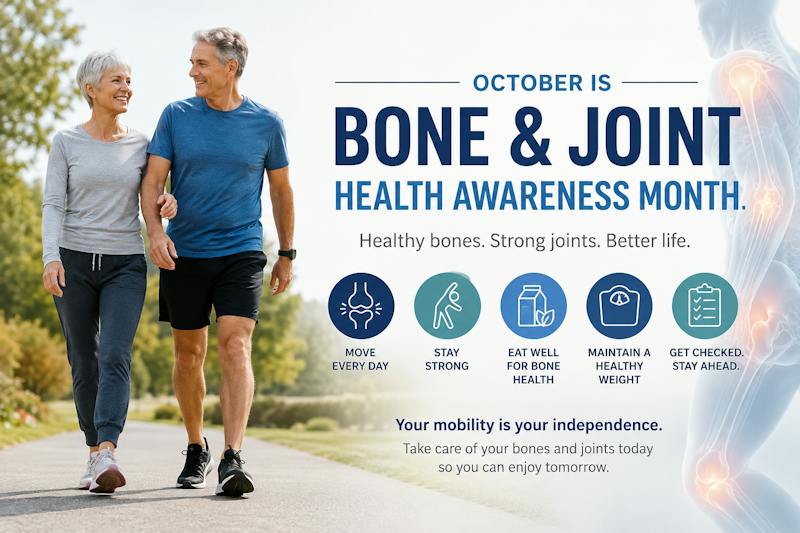
October Is Bone and Joint Health Awareness Month—A Good Time to Pay Attention to the Aches, Pains, and Changes Your Body May Be Telling You About
Strong bones and healthy joints are essential to almost everything you do—from walking and climbing stairs to exercising, working, traveling, and enjoying time with family. Yet it's easy to take your musculoskeletal health for granted until pain or stiffness begins interfering with everyday life.
October's Bone and Joint Health Awareness observances are an opportunity to focus on conditions including arthritis, back pain, osteoporosis, injuries, and other musculoskeletal problems.
At Premier Orthopaedic Associates, we believe taking care of your bones and joints isn't just about treating an injury. It's about protecting your mobility, independence, and quality of life for years to come.
Here are seven ways you can start.
1. Don't Assume Joint Pain Is Just Part of Getting Older
One of the biggest misconceptions about joint health is that pain is inevitable as you age.
Occasional soreness after activity may be normal, but persistent joint pain, swelling, stiffness, or reduced range of motion can be signs of an underlying orthopedic condition.
Osteoarthritis, for example, occurs when changes within a joint—including deterioration of cartilage—lead to symptoms such as pain, stiffness, swelling, and decreased mobility. It commonly affects the knees, hips, and hands.
The earlier you understand what's causing your symptoms, the sooner you can explore treatment options that may help preserve your joint function.
2. Know the Early Signs of Arthritis
Arthritis doesn't always begin with severe pain. Early symptoms can be surprisingly subtle.
Watch for:
- Morning joint stiffness
- Pain after walking or physical activity
- Swelling or tenderness around a joint
- Reduced flexibility or range of motion
- Aching after sitting for long periods
- Difficulty climbing stairs
- Changes in your ability to perform everyday activities
If these symptoms persist or become more frequent, an orthopedic evaluation can help determine what's happening inside the joint.
3. Keep Moving—even if You Have Arthritis
When joints hurt, your instinct may be to move less. But appropriate physical activity can actually be an important part of managing arthritis and maintaining joint function.
Walking, swimming, cycling, strength training, and other low-impact activities can help maintain flexibility and strengthen the muscles that support your joints.
If pain is making exercise difficult, physical therapy can help you learn how to move safely while improving strength, balance, flexibility, and function.
4. Build Strong Bones Before You Need Them
Bone health deserves just as much attention as joint health.
As we age, maintaining bone strength becomes increasingly important because loss of bone density can increase the risk of osteoporosis and fractures.
Weight-bearing exercise, strength training, adequate nutrition, and discussing your individual osteoporosis risk factors with your healthcare provider are important parts of protecting your bones.
Women approaching or past menopause and adults with other osteoporosis risk factors should be especially mindful of bone health.
5. Pay Attention to Back and Neck Pain
Bone and joint health doesn't stop at your knees and hips. Your spine is an essential part of your musculoskeletal system.
Persistent lower back pain, neck pain, sciatica, numbness, tingling, or weakness shouldn't simply be ignored.
Conditions such as spinal stenosis, degenerative disc disease, herniated discs, and arthritis of the spine can affect mobility and quality of life. Depending on the cause, treatment may include physical therapy, pain management, injections, minimally invasive procedures, or surgical care.
Getting an accurate diagnosis is the first step toward finding the right treatment.
6. Protect Your Joints Before an Injury Happens
Previous joint injuries can increase the risk of developing osteoarthritis later in life, making injury prevention an important part of long-term joint health.
You can help protect your joints by:
- Warming up before exercise
- Gradually increasing workout intensity
- Strengthening the muscles surrounding your joints
- Using proper technique during sports and exercise
- Wearing appropriate footwear
- Allowing your body adequate recovery time
- Addressing injuries instead of repeatedly “pushing through” pain
Taking care of an injury today may help protect that joint years from now.
7. Know When It's Time to See an Orthopedic Specialist
You don't have to wait until pain becomes unbearable to seek orthopedic care.
Consider scheduling an evaluation if you experience:
- Joint pain that isn't improving
- Recurring swelling or stiffness
- Difficulty walking or bearing weight
- Loss of strength or range of motion
- Pain that wakes you at night
- Numbness, tingling, or weakness
- An injury that isn't healing as expected
- Pain that prevents you from doing activities you enjoy
Early diagnosis may mean more conservative treatment options and a faster path back to the lifestyle you love.
Your Bone and Joint Health Is an Investment in Your Future
Healthy bones and joints help keep you moving through every stage of life. Whether you're a competitive athlete, a weekend warrior, an active grandparent, or simply someone who wants to remain independent as you age, taking care of your musculoskeletal health today can make a difference tomorrow.
At Premier Orthopaedic Associates, our specialists provide comprehensive orthopedic care for conditions affecting the bones, joints, muscles, and spine. From diagnosis and conservative treatment to physical therapy, pain management, and advanced surgical options, we're here to help you move better and live better.
Don't Let Pain Become Your New Normal
To learn more about keeping your joints and bones healthy, watch our podcast episode with Dr. Eddie Wu.
📞 Call or text Premier Orthopaedic Associates at 856.690.1616
🌐 Visit poasnj.com
Premier Orthopaedic Associates
Helping South Jersey Move Better, Feel Better, and Live Better.